Monday, 5 August 2013

Value Of NFC Mobile Payments To Pass $100bn Mark In 2016


Mobile payments utilising NFC (Near Field Communication) technology will have a total value of $4 billion this year, but in 2016 the figure will cross the $100 billion barrier and it will reach $191 billion in 2017.
This prediction comes from a report by ABI Research, whose publication bears the title "Mobile Payments, NFC, and Contactless Convergence". The company dwells extensively on market convergence, identifying the main beneficiaries and the obstacles before successful convergence.
According to ABI, the storage of proximity, P2P and online payment capabilities on a single NFC-enabled device will set off the convergence process across a number of other markets, among them ticketing, retail, loyalty and access control. Market convergence is not yet ripe enough for mass commercial roll-out but ABI believes it has identified the added value that NFC could bring. A successful outcome will deliver benefits to smart card and IC suppliers, original equipment manufacturers, mobile network operators, partnering service providers and payment networks.
Phil Sealy, research analyst at ABI, pointed out that it would be at least two more years before market convergence became a reality. In ABI's view, the first markets to reap the benefits will be transportation and ticketing. The company forecasts that 26% of all NFC-enabled mobile phones will feature a contactless ticketing application in 2017. This will make it possible for transport authorities to provide new added value services such as route planners, delay bulletins and timetables.
Before market convergence can be successfully achieved, a number of issues need to be dealt with, ABI practice director John Devlin said. One such issue is the development of clear business models, using real-world case studies to gauge potential returns.

Sunday, 4 August 2013

Apple Faces Antitrust Oversight in U.S.


apple

he US Justice Department is pressing for the appointment of an antitrust monitor to supervise Apple store as part of the remedy for the company's conviction for illegally fixing the price of e-books. 

"The court found that Apple's illegal conduct deprived consumers of the benefits of e-book price competition and forced them to pay substantially higher prices," Bill Baer, assistant attorney general for the Department of Justice's Antitrust Division, said in a statement Friday. 

"Under the department's proposed order, Apple's illegal conduct will cease and Apple and its senior executives will be prevented from conspiring to thwart competition in the future." 

The proposal, which was backed by the attorneys general from 33 states, also called for the cancellation of Apple's agreements with the five major book publishers in the US. 

Apple would also be "prohibited from entering into agreements with suppliers of e-books, music, movies, television shows or other content that are likely to increase the prices at which Apple's competitor retailers may sell that content," the statement said. 

The proposals follow a July ruling that Apple conspired with major US publishers to illegally raised the price of electronic books. 

The antitrust case was brought by the US Department of Justice which alleged that the company's late CEO Steve Jobs reached agreements with five of the top six US publishers before Apple introduced the iPad in 2010 in order to sabotage Amazon, which had dominated the e-book market by selling most titles for 9.99 dollars. 


FBI Spies on Suspected Criminals by Hacking Into Computers


Fbi-director
LAS VEGAS — To monitor and surveil suspected criminals, the Federal Bureau of Investigationhacks into their computers and smartphones, installing malware and so-called spyware on those devices. For these operations, the FBI uses the services of contracting companies; information that has come to light mainly due to research performed on LinkedIn.
The feds are increasingly using these tactics, which are typically employed by cybercriminals, to access a target's communication when they don't have another lawful way of doing it, as first reported by The Wall Street Journal. It's the FBI's answer to what they call "going dark" — when certain communications can't be easily wiretapped.

"There will always be very sophisticated criminals who use communications modalities that are virtually impossible to intercept through traditional means," FBI's Valerie Caproni said at a congressional hearing in 2011. "The government understands that it must develop individually tailored solutions for those sorts of targets."
For Christopher Soghoian, principal technologist at the American Civil Liberties Union, when Caproni says "tailored solutions," she actually means something else.
"What she means is hacking and malware," Soghoian said in a presentation on the topic at the hacking conference Def Con on Friday.
The arm of the FBI responsible for these kind of operations is the Remote Operations Unit (ROU). And to get access to a potential criminal's computer, the unit develops its own hacking and spying tools, but sometimes it gets them from contracting companies, who send employees to help the feds in their operations.
It was Soghoian himself who noticed the name of that that unit in a heavily redacted document (.PDF) obtained by the digital rights advocacy group Electronic Frontier Foundation. That unit piqued his curiosity and he spent six months researching it online, mainly using open source intelligence, i.e., Google and LinkedIn. His online research is what led to the WSJ scoop.

What I found is that the FBI is in the hacking business too
," Soghoian said.

Soghoian first found materials on training seminars for prosecutors that listed the ROU's Unit Chief as a speaker. His name is Eric Chuang. Just by googling his name, Soghoian found a Zoominfo page that described Chuang's job as "lawful computer collection capabilities in support of FBI investigations."
His LinkedIn research also led to more information. Specifically, Soghoian found who else is in the hacking business along with the FBI: "A couple" of companies claim to supply people to the FBI for these operations.
"Contractors, like everyone else, they want to keep their resume up to date, in case they get a new job," explained Soghoian to a large crowd packed inside the Penn and Teller Theater at the Rio Hotel. "And they list things in their resume, maybe things they shouldn't be listing, revealing what they did at their old job."
Soghoian quoted from the profiles (that appear to have been removed or hidden) of two employees of James Bimen Associates, a government contractor based in Virginia. "Worked with FBI case agents with our surveillance imagery software that is currently installed on criminal subject machines in the field," read one, according to Soghoian.
It's with the help of these contractors that the FBI gets access to computers. Access that is sometimes gained via email phishing attacks that lead a suspect to install malware on their computer. That malicious software then allows the FBI to turn on the microphone or camera on his or her smartphone and laptop. Other times, according to officials who spoke to the WSJ, they use zero-day exploits, security holes that haven't been patched yet.
Mark Eckenwiler, a former federal prosecutor and surveillance law expert, told the WSJ that these techniques might be illegal without a search warrant, unless they only concerned metadata, in which case a lower standard court order might be enough.
Regardless of the current law, Soghoian notes that the hacking operations have been performed in the dark, without public discussion.
"There hasn't been a debate in Congress about the FBI getting into the hacking business, there hasn't been any legislation giving this power, this just sort of happened out of nowhere," Soghoian said. "Had it not been for the sloppy actions of a few contractors eagerly updating their LinkedIn profiles, we would've never known about this."

WHY… THE MOST IMPORTANT QUESTION IN SOCIAL MEDIA


photodune 1667392 why question in metal type xs WHY... The Most Important Question in Social MediaThe question for most businesses leaders is not “if” they should be using social media. There are far more important questions to both ask and answer.
Did you know that on average 98% of the people who “like” a business Facebook page will never visit the actual page again? They may only see it in their newsfeed “if” the brand is lucky and Facebook’s edgerank algorithm determines it is worthy of a view in the newsfeed of their fans.

Competing for eyeballs

iStock 000023754107XSmall1 WHY... The Most Important Question in Social MediaAs more and more brands jump on the social networks there is no shortage of tweets to read, Instagram photos to view, videos to watch and blogposts to learn from. Every brand seems to have the product you need, the community to join and the answer to all of your life and business problems.
Unfortunately many brands and small business owners have no clue how to engage using social media. They forget that social media is about people, relationships and conversations that bring value.
They hop on Twitter and assume it instantly becomes their one way highway to spam the world. They don’t think twice about spamming our email inbox, LinkedIn messages, Twitter direct message stream and the list goes on.
If there is a route to your inbox and eyeballs the spammers are going to find it. The social networks are going to offer them a paid track to get their ads in front of you one way or another.
Competing for our eyes, ears, minds, hearts and overall attention is becoming more challenging each day.

Is it working?

The question is this… is it working? What do you think of the people who blast the same ads in your face daily? What about the people who preach quality over quantity yet auto tweet 24/7 the same tweets every day? What about the brands that beg you to like their page, join their community, follow them on Twitter or read their blog? My guess is most of them drive you crazy.
Are they inspiring you to follow them? Are they inspiring you to click? To like? To read? To engage? Or are they doing just the opposite?
The reason is they are not answering the most important question in your mind. The question is WHY.
Let’s turn this question around now. Let’s talk about your community, your target audience, colleagues, partners, friends and future customers.
I’m going to make this simple and give you the question and the answer.

The most important question you should be asking when using social media for business is… WHY!

Saturday, 3 August 2013

Google setting up 'lost phone' feature for Android devices


zdnet-google-android-lost-phone
While the iPhone arguably doesn't come with the best native app for maps, at least users had a better shot of finding them with the Find My iPhone app if something went awry.
Now Android owners will soon be able to enjoy a similar level of security.
Google is rolling out the Android Device Manager for locating a lost device and/or erasing it completely remotely if the smartphone or tablet falls into the wrong hands.
Android product manager Benjamin Poiesz explained in a blog post on Friday how it works in a nutshell:
If you ended up dropping your phone between those couch cushions, Android Device Manager lets you quickly ring your phone at maximum volume so you can find it, even it's been silenced. And in the event that your phone or tablet is out of earshot (say, at that restaurant you left it at last night), you can locate it on a map in real time.
This lost device functionality will be rolled out to devices running Android 2.2 or above at yet unspecified date later this month.
Users will need to be signed into Google Accounts to make use of it, and there will be a standalone Android app (again, similar to Apple's Find My iPhone app) for managing (and locating) devices.

Friday, 2 August 2013

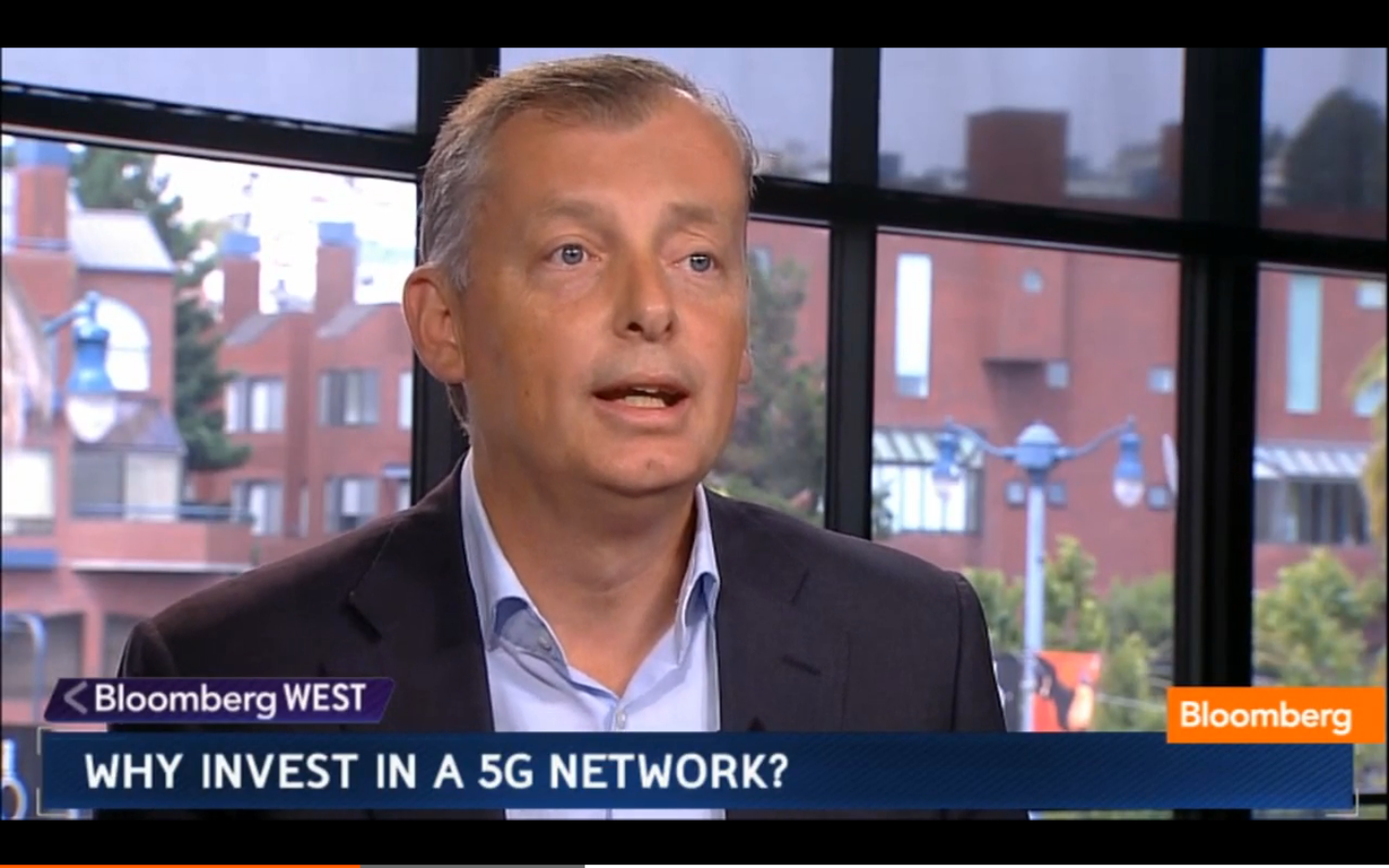
Back To The Future: How 5G Networks Will Change The World

ulf Ewaldsson interview
LTE, 3G, and 4g: specs that are often thrown around by tech companies to describe their networks and mobile devices. Oftentimes these phrases are being used purely as marketing tactics, without the end user having a true understanding of the technology. With each new network generation, more people actually understand what the ‘g’ stands for in 3 or 4g. Better and faster network capabilities appear to become more available with time, and now that we’ve cracked the code on 4G LTE devices like your iPhone, technology enthusiasts are already looking to future networks.
Bloomberg.com sat down with Eriksson’s CTO, Ulf Ewaldsson, to discuss the company’s investment in 5G technology. Ewaldsson envisions a world that would include the interconnectivity of all devices—not just smartphones. As he told Bloomberg.com:
“I think what we see is with communication is going beyond just smartphones, [going] beyond just the user experience. but [things like] inter machine to machine communication, new areas. And then we would like to see the whole network change in a way that we can really facilitate these things in reality.”
Ewaldsson imagines this interconnectivity would include things like allowing your thermostat to communicate with phone or car, so the temperature would be just right when you reach home, or having cars drive completely unmanned at speeds upwards of 60 MPH. minority-report-2
“You can see it already in hollywood movies.” Ewaldsson says. “I think the most important thing is the performance. That is what the 5g is about. To get the superior performance that would allow us to do remote surgery over the next generation systems or allow us to drive the car more than 120 miles of — that is not allowed — 60 miles an hour down the road, and remotely.”
Although 5G technology is a few years out – Ewaldsson doesn’t see it happening until after 2020 –  it’s definitely a step in the right direction. A 5G network of this magnitude would not just improve our gadgets, it would improve our quality of life, and isn’t that what technology is supposed to do?

Leaked Nokia Tablet Specs: Quad Core Snapdragon 800, Adreno 330 and 1080p Resolution


nokiatablet

We’ve had every bit of rumor with regards to the upcoming Nokia tablet. At some point, we’ve almost lost our hopes that Nokia will give us a tablet that we want. But on the other hand, we also think that it is not yet time. Though hardware wise, Nokia is ready but how about the operating system?
It seems that the long wait is finally over. Recent leaks show that a rumored Nokia tablet is in the works – now with detailed specs.
A certain Nokia RX-114 appeared on GFXBench site that shows interesting specificiations that leads to a device that we are all waiting for – a Nokia tablet. The leak RX-114 sports a Quad Core Snapdragon 800 and Adreno 330. The resolution however shows 1371×771 but according to GFXBench its actual resolution is  1920×1080 just like the Surface Pro.
Untitled103

This recent progress really proves that Nokia is now ready to dominate the tablet wars and expand the Windows users base both Windows Phone and Windows 8/RT. We can’t wait to see this device soon!